Tsavo is Kenya's largest protected area by a significant margin, split by the Nairobi–Mombasa railway and highway into Tsavo East and Tsavo West — two parks sharing a common thread of vast, relatively untouched wilderness.
Overview
Tsavo East is characterized by open plains and dramatic red-dust “red elephants.” Tsavo West, more rugged, is known for Mzima Springs — crystal-clear pools with an underwater viewing chamber for hippo and fish — and volcanic scenery.
Wildlife You'll See
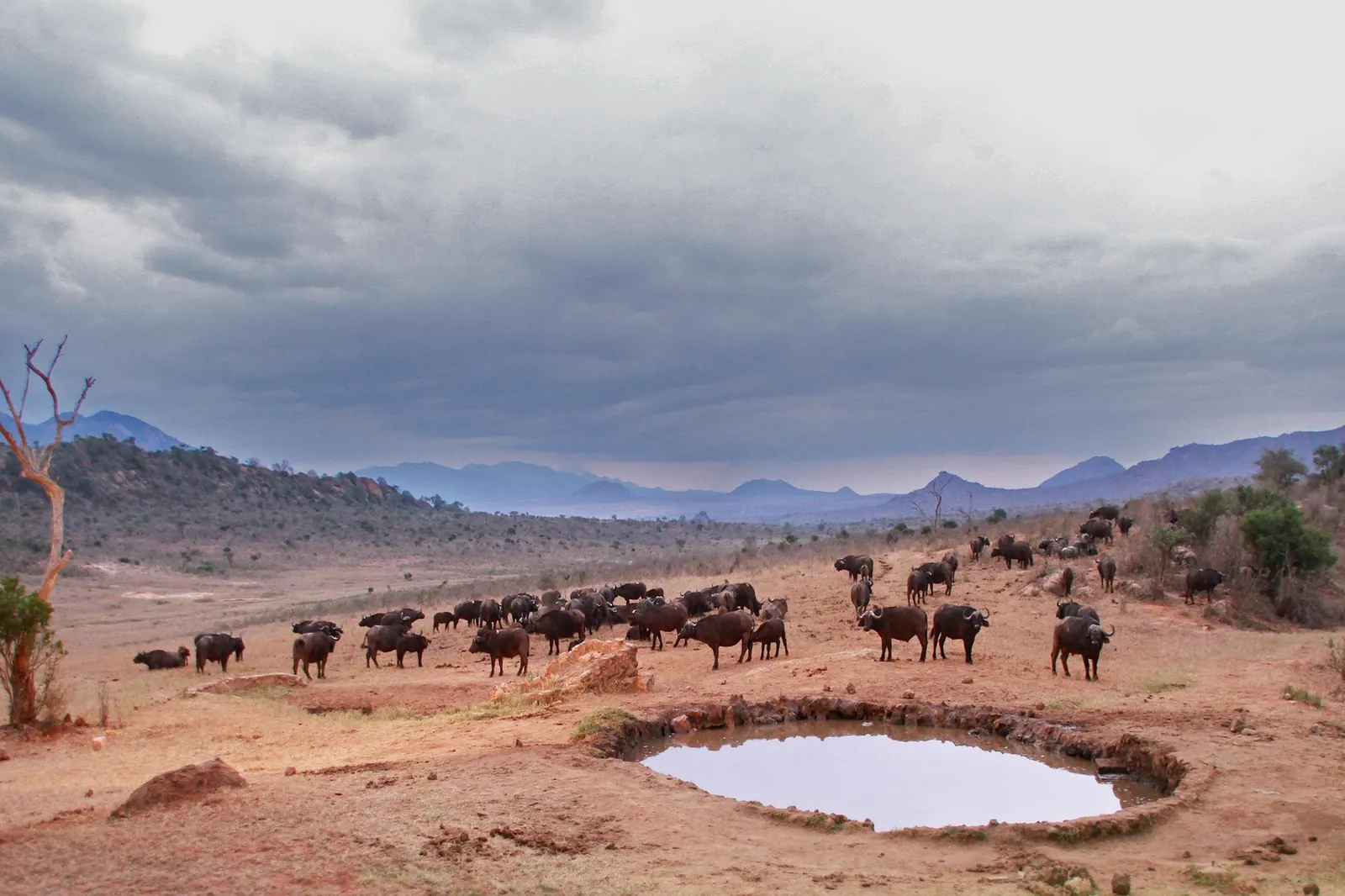
Tsavo holds one of Kenya's largest elephant populations, along with lion, buffalo, and healthy plains game. Black rhino are present within the Ngulia Rhino Sanctuary in Tsavo West.
Best Time to Visit
Luxury Accommodation
Tsavo has fewer ultra-luxury properties than the Mara or Laikipia, part of its appeal. See the full profile for Finch Hattons Luxury Tented Camp.
Signature Experiences
Underwater hippo and fish viewing at Mzima Springs is unique to Tsavo West. The park's scale rewards longer game drives and a slower pace.
Combine With
Tsavo's location makes it a natural link between Amboseli and the Kenyan Coast.
Frequently Asked Questions
What's the difference between Tsavo East and Tsavo West?
Tsavo East is more open and dry, known for red-dust elephants; Tsavo West is more rugged, home to Mzima Springs and volcanic scenery.
Is Tsavo good to combine with a coastal safari?
Yes — Tsavo sits directly along the route between Nairobi and Kenya's coast.
How many days should I spend in Tsavo?
Two nights works well as a stopover; three or more allows fuller exploration of both parks.